
AI-powered ad spend for SaaS and AI companies
Ad spend that answers to paying customers
ReadyLift.ai is built for companies that sell SaaS and AI products. It runs one message across Google, Meta, LinkedIn, ChatGPT and TikTok ads, A/B tests the ads and the landing pages, and follows each click through trial and activation to the first payment. An agent reads the results every morning and proposes the next change. You approve it.
Five ad platforms
One campaign, the same message on each.
Who it is for
Built for how SaaS and AI companies sell
Most ad tools were made for a store, where the sale is finished at checkout. A software sale is not. ReadyLift starts from four facts about it.
- The sale finishes after the click
- Sign-up, trial, activation, then a first payment days or weeks later. Each step is counted and tied back to the ad.
- A trial is not a customer
- Platforms, pages and creatives are judged on who paid, with the cost of every stage on the way there.
- Pricing is a blend
- Plans, usage, prepaid packs and AI tokens each keep a different share. Customers are valued on what you keep.
- Your product knows the outcome
- Stripe reports payments. Your product reports trials and activations through an MCP server, an Events API or a webhook.
A/B testing
Test the ad and the landing page together
Ad tools usually test the ad and stop at the click. Page tools test the page and do not know which ad sent the visitor. ReadyLift tests both in one campaign and judges each on who went on to pay.
The ad
Up to three versions of the ad run side by side on each platform you connect.
The landing page
Two or three versions of the page share one address on your own domain, and ReadyLift splits the visitors.
The pairing
A Visit ID records which ad and which page each visitor saw, so results can be read by ad, by page or by the two together.
Budget
One daily budget across every ad platform
Set one number: what you want to spend on ads each day. ReadyLift divides it across Google, Meta, LinkedIn, ChatGPT and TikTok ads, and the agent moves it toward the one that brings paying customers for less.
- One budget, not one in each ad account. It covers every platform the campaign runs on.
- The split follows who paid. Money moves to the platform where a paying customer costs less.
- The total is never raised. Only the split changes, starting the next day.
- Your card stays with each ad platform. ReadyLift never holds your ad money.
To start
After Meta Ads brings paying customers for less
The total stays $20 a day.
How it works
A loop from buyer to paying customer, checked every morning
Keep four libraries
Personas, keyword sets, creative sets and landing page groups, plus your media. Each is reusable.
Build one campaign
Pick one of each, set one daily budget and a CAC guardrail, and launch on every connected platform.
A/B test ads and pages
Up to three versions of the ad run on each platform, and visitors land on two or three versions of the page at one address on your own domain.
Count who paid
Outcome sources report sign-ups, trials, activations and payments. The pricing model says what each customer is worth.
Approve the next change
The agent reads the results each morning and proposes what to do. Nothing changes until you approve.
What you get
Built around the number that matters
Clicks and sign-ups are easy to buy. ReadyLift measures every platform, page and creative by the customers who went on to pay.
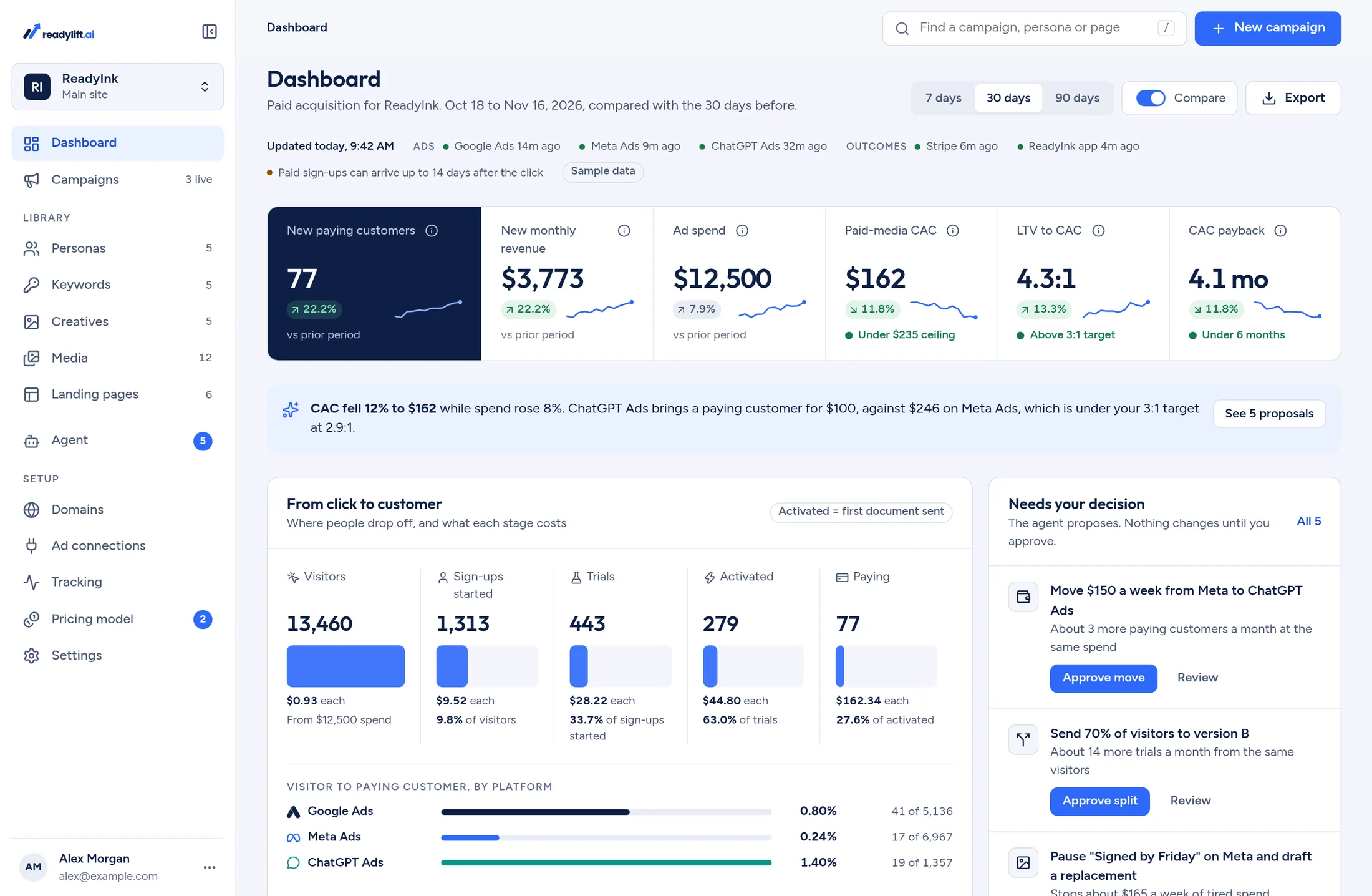
Dashboard
Six figures, judged against your targets
New paying customers, new monthly revenue, ad spend, paid-media CAC, LTV to CAC and CAC payback. Each one says where it stands against your target and opens its formula in one click.
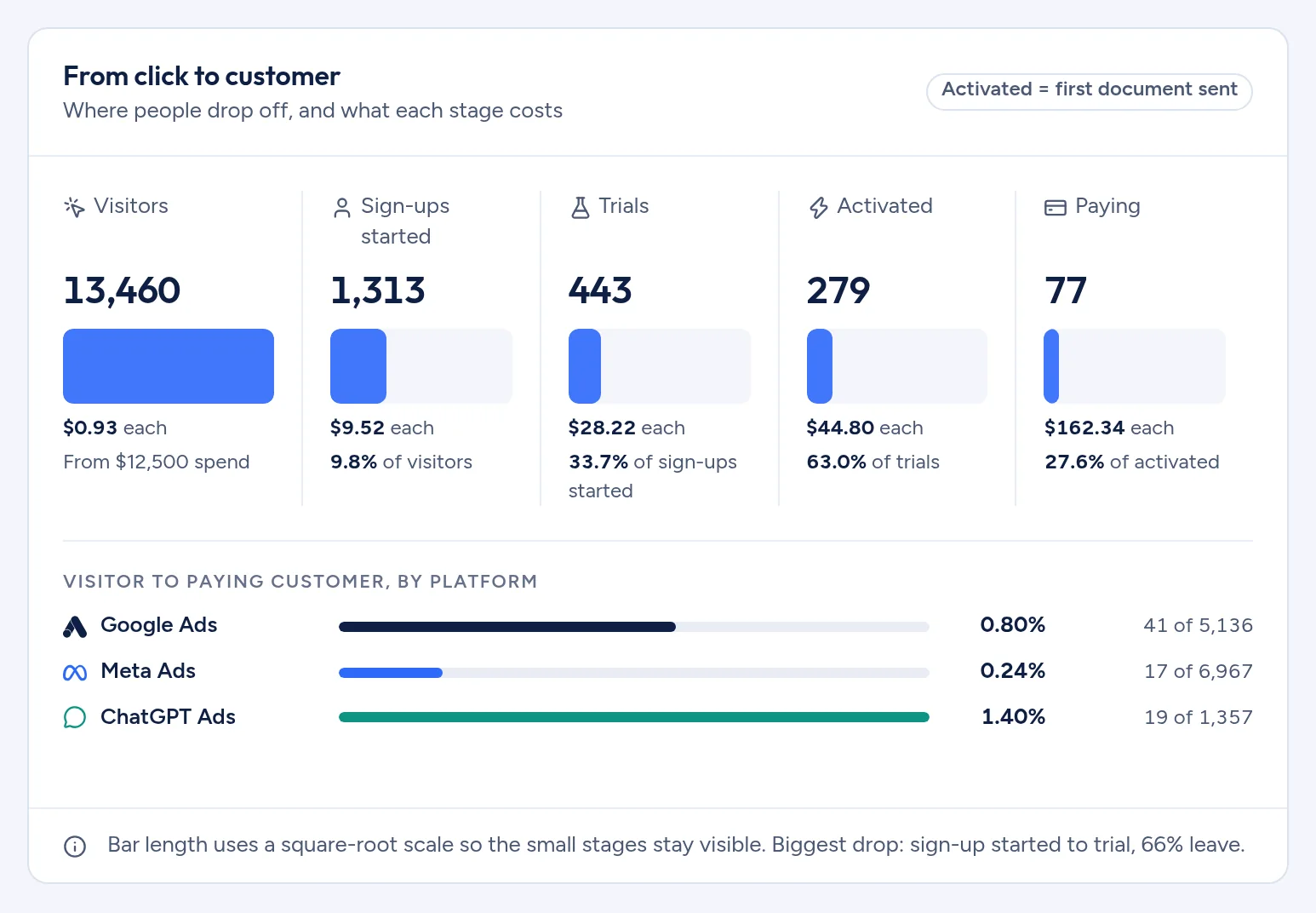
- A written summary of what changed and why
- Cost of every stage from visitor to paying customer
- The same definitions on every platform
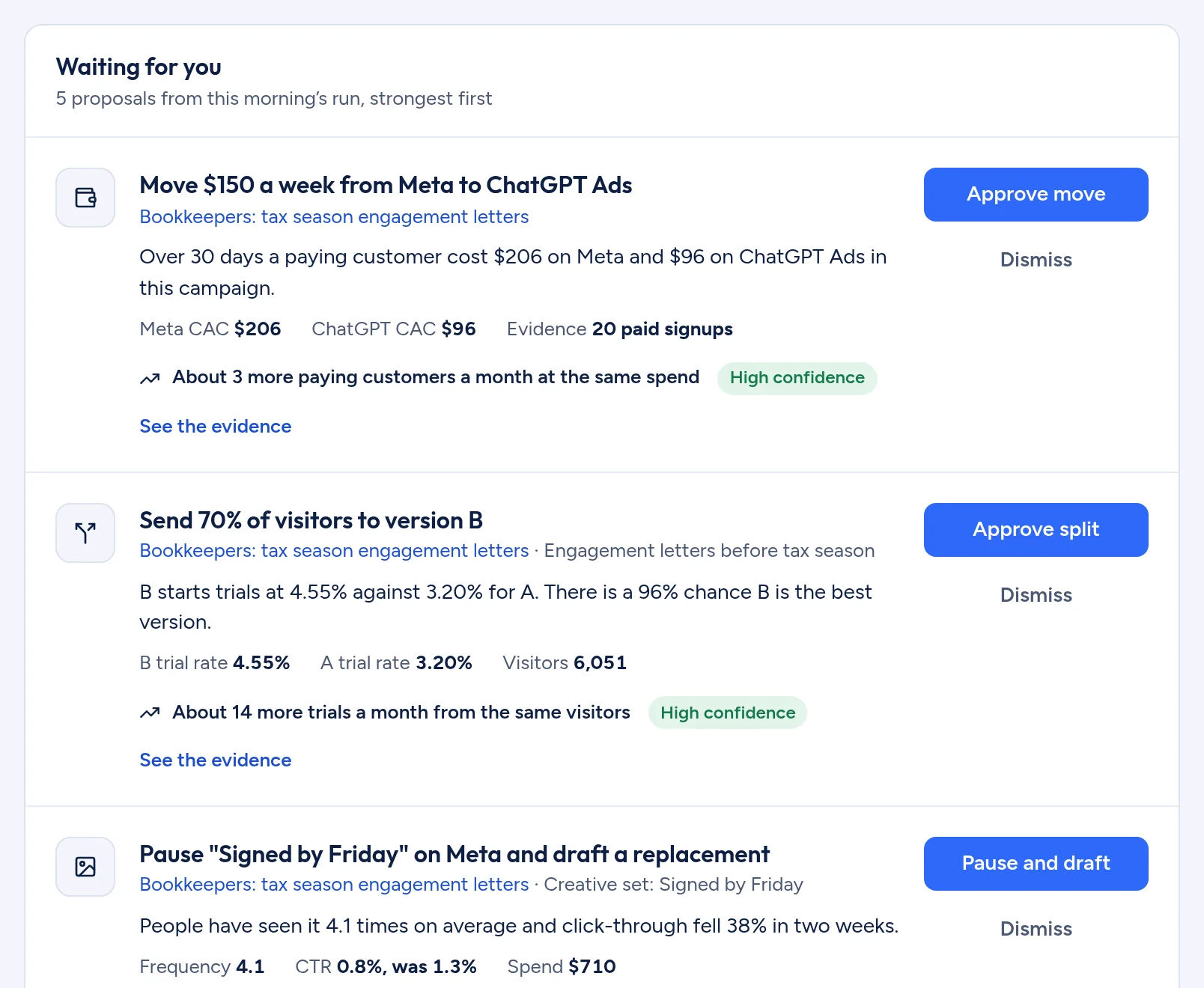
Agent
Proposals every morning, with the evidence attached
The agent reads your ad accounts, pages and payments, then proposes specific changes: move spend, change a split, replace a tired creative, block wasted search terms. You approve or dismiss.
- Evidence, expected effect and confidence on each one
- Approve with Undo, or dismiss with a reason
- It also says when it chose to wait
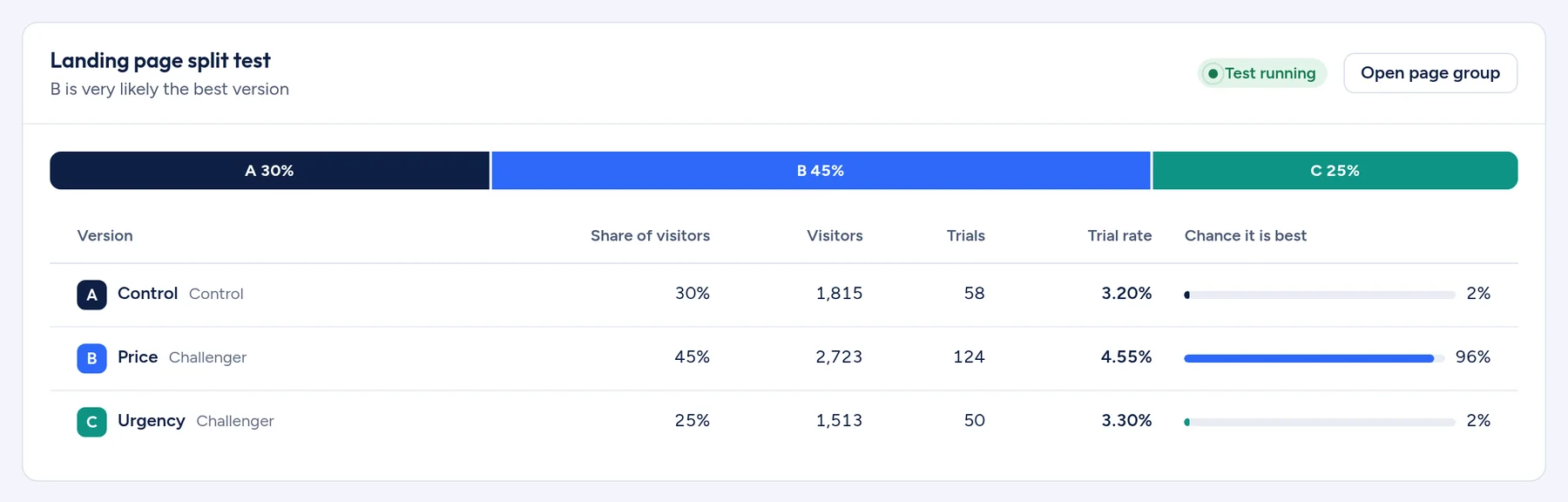
Landing pages
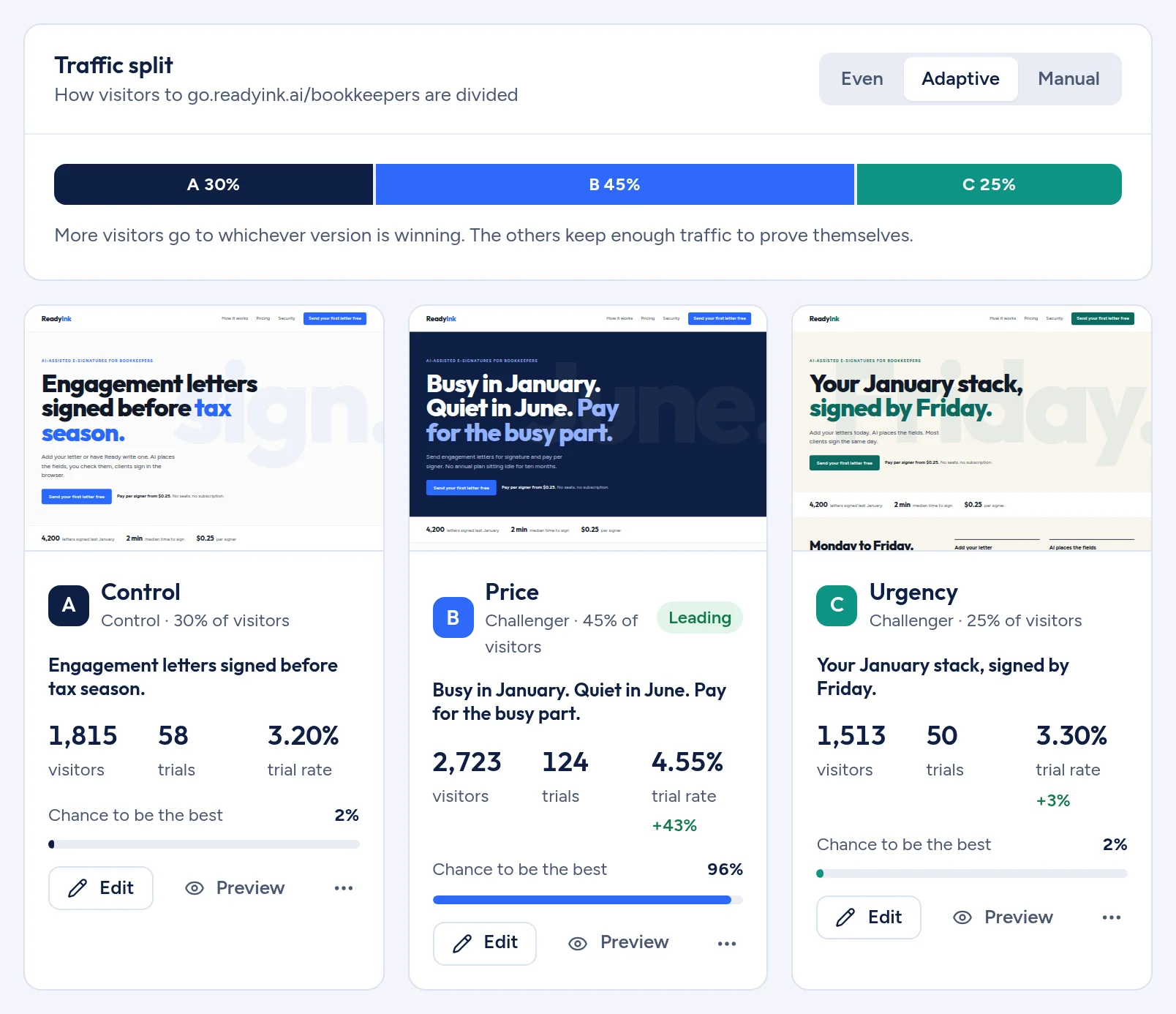
Two or three versions at one address
Ready AI drafts versions from your persona and your ad, each with a different angle. Your ads point at one test link on your own domain, so traffic moves to the winner without the ads going back through review.
- Even, adaptive or manual traffic split
- Judged on the outcome you chose, not clicks
- Tested alongside up to three versions of the ad
Pricing model
Know what a customer is worth before you bid
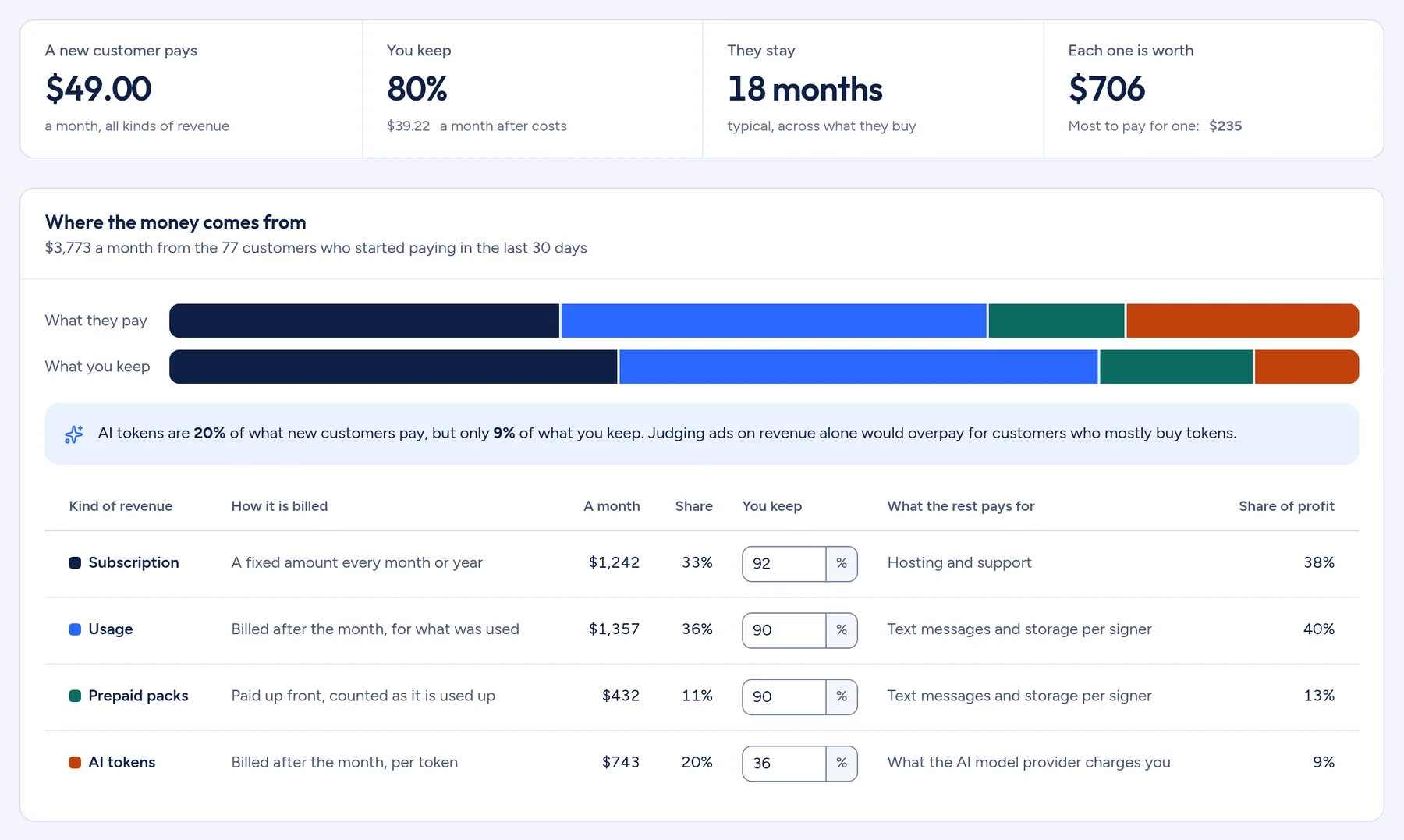
ReadyLift reads your pricing and works out what each kind of new customer is worth after costs, across subscription, usage, prepaid packs and AI tokens. That sets your CAC ceiling.
- Judged on what you keep, not on revenue
- Worth by what a customer buys first
- Which campaigns bring the valuable customers
Tracking
Count the outcome that matters: paid
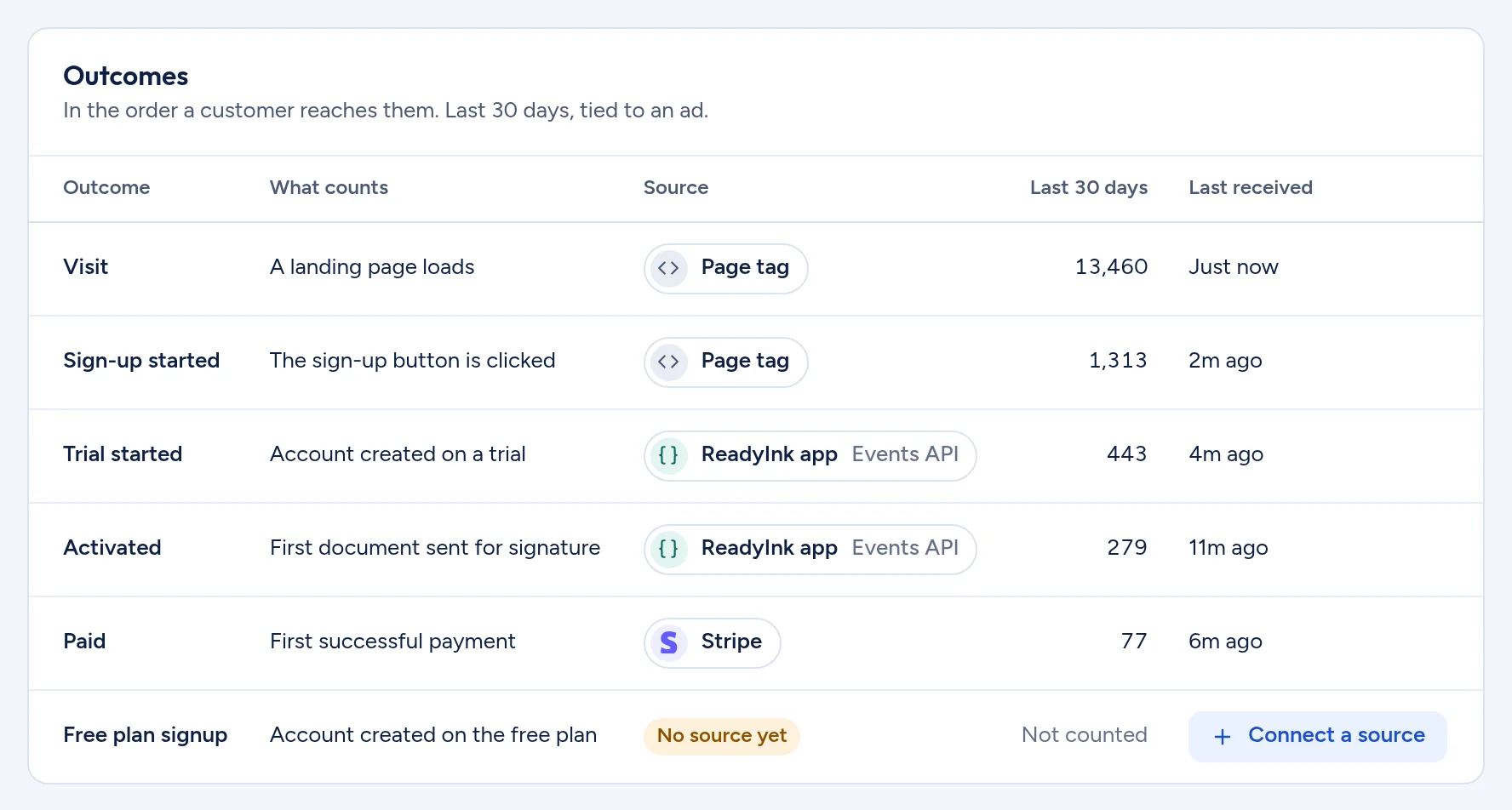
Visits and sign-ups come from a built-in page tag. Payments come from Stripe. Trials and activations come from your own product through an MCP server, an Events API or a webhook. A Visit ID ties each one back to the ad.
- An event log that shows what was counted and why
- Personal data dropped before storage
- Sources are paused, never deleted
Library
Make it once. Use it in every campaign.
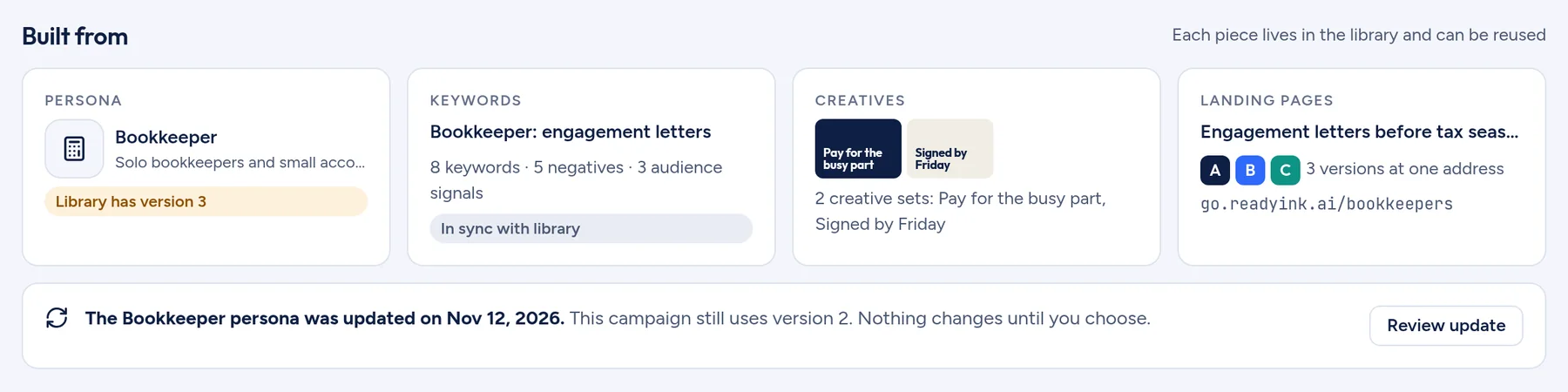
A campaign is built from four parts, each kept in a library. Change a part and running campaigns keep the version they launched with until you choose to update them.
Personas
Each buyer as short points, every one tagged with its source. Research new buyers with AI or import them from a document.
Keyword sets
Search terms, blocked terms and audience signals. One set serves every platform.
Creative sets
One message with a version and a live preview for each platform. A/B test up to three versions of the ad, with a warning when one wears out.
Landing page groups
Two or three versions behind one test link, drafted by AI, built by hand or brought from elsewhere.
Media
Every image and video in one place, checked against each placement before it runs.
Connections
Ad accounts for spend, outcome sources for results. Connecting spends nothing.
Control
What the agent may never do
You choose how much the agent does: ask before every change, apply changes within limits you set, or off. These limits hold in every setting.
- BudgetIt never raises your total daily budget. It only moves money between platforms.
- DeletingIt never deletes anything. It pauses, retires or archives.
- CeilingIt pauses a campaign and asks you when a customer costs more than your CAC ceiling.
- PatienceIt waits for enough data before judging a campaign.
AI assistants
Ask ReadyLift from ChatGPT or Claude
ReadyLift has its own MCP server. Add its address to ChatGPT, Claude or any assistant that supports MCP, and ask what a paying customer cost, which test is winning and what the agent proposes. Changes to your ads still wait for your approval.
Questions
Before you ask
Who is ReadyLift.ai for?
Companies that sell SaaS and AI products and buy their own ads. It is built for a founder or a small team that wants to know what a paying customer costs.
Why start with SaaS and AI companies?
Because their ads are the hardest to judge. The sale finishes days or weeks after the click, a trial is not yet a customer, and pricing often blends a plan with usage or AI tokens. ReadyLift is built around those three problems first.
Does it work with usage-based and token pricing?
Yes. The pricing model values subscription, usage, prepaid packs and AI tokens separately, each on the share you keep after costs. A new customer starts at a typical figure and is corrected with real invoices after each full month.
We have a free plan or a trial with no card. Can those be counted?
Yes. Stripe only sees what is billed, so your own product reports free sign-ups, trials and activations through an MCP server, the Events API or a webhook. Stripe then supplies the first payment.
Can I A/B test the ads as well as the landing pages?
Yes. A campaign can test up to three versions of the ad and two or three versions of the landing page at the same time. Both are judged on the outcome you chose, such as trial started or paid, and results can be read by ad, by page or by the two together.
Can I set one budget for all my ad platforms?
Yes. A campaign has one daily budget. ReadyLift divides it across the platforms the campaign runs on, and the agent proposes moving it toward the platform that brings paying customers for less. The total is never raised. Ad platforms treat a daily budget as an average, so a single day can come in above it while the week or month evens out.
Can I use ReadyLift from ChatGPT or Claude?
Yes. ReadyLift has its own MCP server, which ChatGPT, Claude or any assistant that supports MCP can connect to. The assistant reads your results and the agent’s proposals. Changes to your ads still need your approval.
Does the agent change my ads without asking?
Not unless you allow it. Set it to ask before every change and nothing in an ad account moves without your approval. Each proposal shows its evidence and the effect it expects, and every approval has an Undo.
Does connecting an ad account spend money?
No. Connecting spends nothing. Money moves only when a campaign launches on that platform.
Where do the landing pages live?
On a domain you own. Two or three versions share one address, and your ads point at that one test link. You can also bring pages you already host elsewhere.
How does ReadyLift know who became a paying customer?
From outcome sources. Stripe supplies payments with one sign-in. Your own product can send trials and activations through an MCP server, an Events API or a webhook. Each event is tied back to the ad by a Visit ID.
What personal data do you store?
A source only needs an account ID and a Visit ID. Names, emails, document text and card details are dropped before anything is stored.
Can I delete a campaign?
Campaigns are archived, not deleted. Archiving stops the ads and keeps the results, and a restored campaign comes back paused.
See what your ads are really buying
ReadyLift.ai is opening to a first group of SaaS and AI companies. Tell us where you advertise and we will be in touch.